
Scar Revision with Regenerative Medicine: Advanced PRP and Stem‑Cell Strategies for Natural Scar Repair
Regenerative scar revision blends biologic therapies with targeted procedures to improve a scar’s texture, color, and flexibility while supporting the skin’s own healing. This guide explains how regenerative approaches—especially platelet‑rich plasma (PRP) and stem‑cell–based options—differ from conventional tactics by encouraging collagen remodeling, dialing down chronic inflammation, and limiting fibrosis for more natural repair. You’ll find clear explanations of the core mechanisms, common treatment options, how different scar types typically respond, and what a typical treatment pathway looks like. We also cover safety, realistic outcome expectations, and how combining therapies and optimizing overall health can boost local tissue regeneration and long‑term results.
What Is Regenerative Medicine for Scar Revision?
Regenerative medicine for scar revision uses biologic materials and cell‑based therapies to promote true tissue remodeling rather than only excising or reshaping scar tissue. These treatments introduce growth factors, signaling molecules, or reparative cells that shift healing away from dense, fibrotic scarring toward organized collagen deposition and restored skin architecture. The practical result is smoother texture, better color blending, and increased elasticity compared with many mechanical or resurfacing techniques. Knowing how these therapies work helps patients and clinicians choose the right modalities and set realistic timelines for improvement.
- Growth‑factor stimulation: activates fibroblasts and new blood‑vessel growth to rebuild the dermal matrix.
- Collagen remodeling: replaces disorganized scar collagen with a more organized mix of type I and III collagen.
- Anti‑fibrotic modulation: suppresses prolonged inflammation and myofibroblast overactivity.
With that framework, we can look more closely at the cellular processes regenerative treatments support during scar healing.
How Does Regenerative Medicine Enhance Natural Scar Healing?
Regenerative therapies refine normal healing by calming excessive inflammation, promoting angiogenesis, and guiding collagen synthesis toward an organized matrix. Early control of inflammation limits myofibroblast‑driven contraction and dense collagen packing; treatments such as PRP and mesenchymal cell preparations deliver signals that temper the inflammatory phase and favor constructive remodeling. Growth factors in PRP (for example, PDGF, TGF‑β, VEGF) stimulate fibroblasts and new capillary growth, supporting healthier dermal architecture and better color matching over time. Recent studies through 2020–2023 suggest that paracrine signals from stem‑cell–derived secretomes provide anti‑fibrotic and pro‑regenerative cues that improve elasticity and reduce redness, setting the stage for focused procedural refinements to surface texture.
Which Regenerative Therapies Are Used for Scar Treatment?
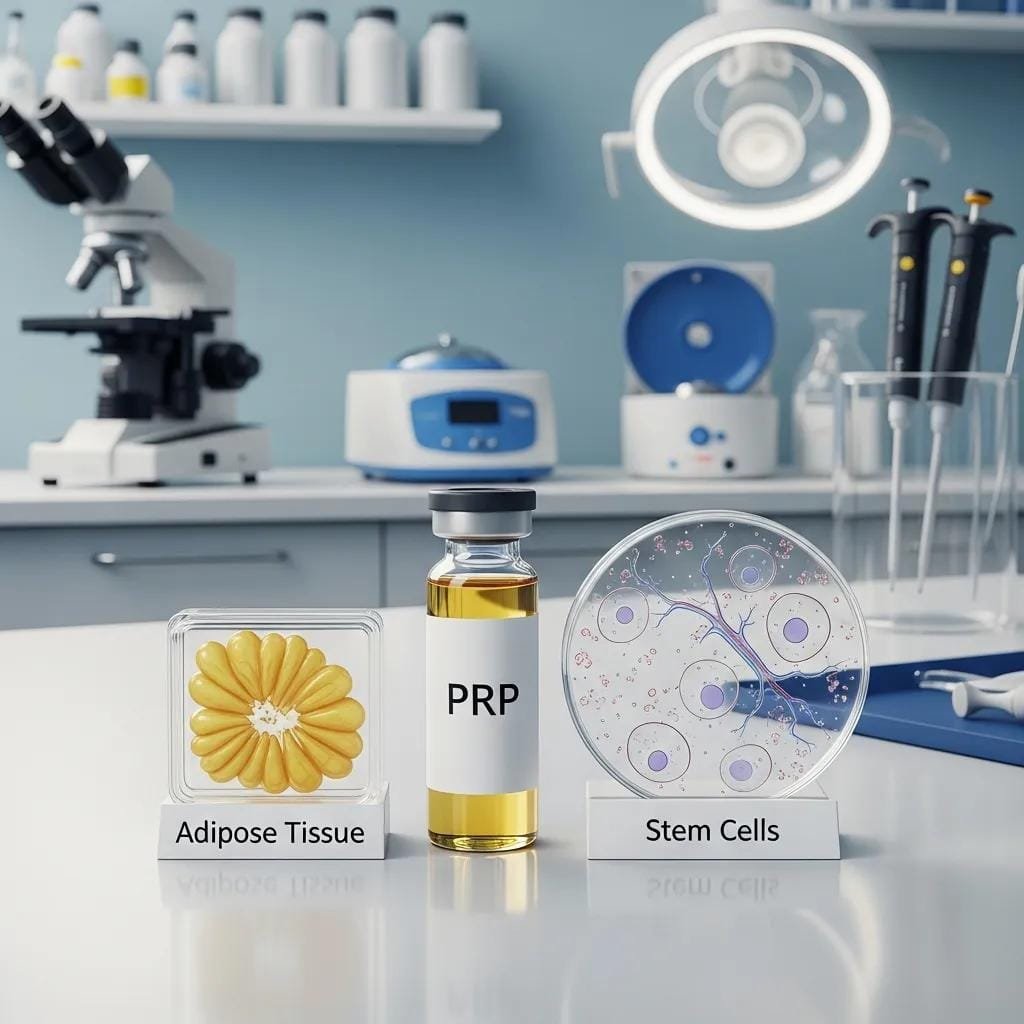
Clinicians commonly deploy a portfolio of regenerative options—PRP, stem‑cell–enriched injections, adipose‑derived fat grafting, and combination protocols—to address scar pathology at multiple biological levels. Each modality has a distinct source, mechanism, and outcome profile, and many patients do best with staged combination strategies that pair biologic modulation with mechanical remodeling.
Below is a concise comparison to clarify the strengths and typical indications for each regenerative approach, helping patients and clinicians align treatment choice with scar type and goals.
Introductory comparison of principal regenerative modalities:
| Approach | Source / Delivery | Typical Mechanism | Typical Outcomes |
|---|---|---|---|
| Platelet‑Rich Plasma (PRP) | Autologous blood concentrate, injected or used with microneedling | Growth‑factor driven collagen induction and angiogenesis | Smoother texture, improved color match, modest volume support |
| Stem‑Cell–Enriched Therapy (MSCs/ADSCs) | Autologous adipose or bone‑marrow cells or conditioned media | Paracrine anti‑fibrotic signaling, immunomodulation, tissue remodeling | Increased elasticity, reduced fibrosis; variable volumetric effect |
| Adipose / Fat Grafting | Autologous fat transfer with resident stromal cells | Volume restoration plus stem‑cell–mediated matrix remodeling | Restores contour for depressed scars and improves skin quality |
This overview shows how each approach targets scar biology and why combination plans often outperform single‑modality treatments.
The sections that follow explore PRP and stem‑cell approaches in more depth and outline practical considerations for choosing them.
How Does Platelet‑Rich Plasma Improve Scar Appearance?
PRP improves scar appearance by delivering a concentrated mix of the patient’s own growth factors and cytokines that stimulate fibroblasts, support angiogenesis, and reorganize the extracellular matrix. Prepared by centrifuging the patient’s blood to concentrate platelets, PRP is injected or paired with microneedling to enhance tissue penetration. Growth factors like PDGF, VEGF, and TGF‑β promote new collagen and capillary formation. Clinically, PRP can soften adhesions, reduce depression, and improve color and texture over months; many protocols recommend 2–4 sessions spaced 4–8 weeks apart for progressive gains. Because PRP is autologous it’s generally low‑risk, but results depend on scar age, depth, and skin quality—and PRP is often one part of a multimodal strategy for deeper or more complex scars.
What Role Do Stem Cells Play in Scar Regeneration?
Stem cells—most often mesenchymal stem cells (MSCs) from adipose tissue or bone marrow—help scar regeneration largely through paracrine signaling rather than long‑term engraftment. These cells release cytokines and exosomes that reduce fibrosis, modulate immune activity, encourage angiogenesis, and promote more organized collagen formation, together softening scars and restoring pliability. Adipose‑derived stromal cells are appealing because they’re abundant and can support volumetric restoration when paired with fat grafting. Given safety and regulatory concerns, many clinicians favor evidence‑based, minimally manipulated autologous preparations or cell‑derived secretomes; this conservative approach balances promising regenerative effects with patient safety and appropriate expectations within a staged revision plan.
What Types of Scars Can Be Treated with Regenerative Therapies?
Regenerative therapies can benefit a wide range of scars, but suitability and likely results depend on scar type, age, and depth.
Atrophic (depressed) and acne scars often respond well to collagen‑inductive treatments, while hypertrophic and some surgical scars typically need anti‑fibrotic strategies and careful multimodal care. Burn and large traumatic scars usually require staged plans that combine volume restoration, surface remodeling, and systemic optimization to achieve meaningful functional and aesthetic improvement.
Below is a practical mapping of common scar types to regenerative approaches to clarify realistic treatment pathways.
| Scar Type | Primary Problem | Recommended Regenerative Approaches |
|---|---|---|
| Atrophic / Acne scars | Loss of dermal volume and disorganized collagen | PRP + microneedling; fractional energy devices with biologics; adipose‑cell adjuncts |
| Hypertrophic scars | Excess collagen deposition and elevated fibroblast activity | Anti‑fibrotic strategies, steroid or pressure adjuncts, plus cautious biologics |
| Keloid scars | Pathologic overgrowth beyond wound borders | Multimodal referral care; avoid aggressive stimulatory procedures alone |
| Surgical / Traumatic scars | Adhesions, contour irregularity, thickening | Combination fat grafting, PRP, and scar‑release techniques |
| Burn scars | Contracture, dense fibrotic tissue, functional limitation | Staged remodeling, grafting when needed, regenerative adjuncts to improve pliability |
This mapping sets realistic expectations and helps match therapies to the scar’s underlying biology.
How Are Atrophic and Acne Scars Improved Through Collagen Regeneration?
Atrophic and acne scars improve when we stimulate dermal collagen and restore volume under the epidermis, smoothing surface irregularities and refining texture. Collagen‑induction techniques—such as microneedling with PRP—create controlled micro‑injury that triggers healing while PRP’s growth factors bias repair toward organized matrix deposition rather than disordered scar. When volume loss is significant, adipose grafting or filler‑like approaches combined with regenerative cell signals provide structural lift plus improved skin quality.
Typical algorithms start conservatively with collagen induction (2–4 sessions) and escalate to fat‑assisted or cell‑enriched strategies if contour deficits remain, with visible improvement usually appearing over 3–6 months as remodeling progresses.
How Do Regenerative Treatments Address Hypertrophic and Keloid Scars?
Hypertrophic and keloid scars involve excessive fibrosis and dysregulated fibroblast activity, so treatment emphasizes inflammation control and anti‑fibrotic modulation rather than sole stimulation. Therapies that reduce persistent inflammation, deliver targeted anti‑fibrotic signals, or support remodeling—used alongside pressure therapy or steroid interventions when appropriate—can lower height and redness.
Keloids deserve careful specialist evaluation because aggressive stimulation can worsen growth; experienced teams often use multimodal plans that may include conservative excision followed by anti‑fibrotic biologics or adjunctive radiotherapy. Observing these safety boundaries lets clinicians combine regenerative tools with established scar‑control measures for more reliable, durable results.
Regenerative Treatments for Optimized Scar Revision
Dr. Fred Bloem’s holistic model pairs systemic health optimization with targeted regenerative treatments to amplify scar‑revision outcomes and support long‑term tissue resilience. By assessing nutrition, hormonal balance, chronic inflammatory burden, and circulatory health, the practice addresses root factors that can slow healing and blunt local therapies. Personalization includes a thorough evaluation that guides modality choice, sequencing, and adjuncts that promote collagen synthesis and limit fibrosis. For patients seeking both aesthetic and functional gains, this approach coordinates skin revitalization with supportive regenerative services—such as IV therapies and joint treatments—to build durable tissue restoration.
Patients notice several practical differences in this integrative framework:
- Longer initial assessments that explore systemic contributors and inform treatment sequencing.
- Care plans that combine regenerative modalities with supportive services to enhance tissue repair.
- An emphasis on both cosmetic goals and functional outcomes through individualized protocols.
These distinctions naturally lead to examples of how personalized plans are built and how combination therapies are sequenced for optimal healing.
What Are Personalized Treatment Plans for Scar Repair?
Personalized plans begin with a detailed evaluation of scar age, type, skin quality, and systemic factors that affect regeneration—nutrition, inflammatory conditions, and prior treatments. From that assessment, clinicians select modalities (PRP, adipose‑derived adjuncts, microneedling, staged fat grafting), set treatment cadence, and define monitoring metrics to track progress.
Follow‑up includes standardized photo documentation and outcome tracking so the team can adapt intensity as tissues respond and keep patient goals aligned with biologic change.
How Are Combination Therapies Used for Optimal Scar Healing?
Combination therapies pair complementary mechanisms—PRP’s growth‑factor signaling with microneedling’s mechanical remodeling, or adipose grafting’s volumetric restoration plus stem‑cell trophic support—to deliver broader, more meaningful improvement than single modalities alone.
Sequencing matters: clinicians often begin with controlled micro‑injury plus PRP to induce remodeling, allow that process to begin, then add volumetric or cell‑enriched grafting to restore contour, followed by maintenance sessions to refine texture. This layered strategy raises the chance of measurable, lasting improvement while managing risk.
What Can Patients Expect During Their Scar Revision Journey?
The scar‑revision pathway typically follows three phases—consultation and assessment, procedural treatments, and recovery with ongoing remodeling—each with predictable experiences and timelines. Clear expectations about session numbers, downtime, and when results appear help patients plan and stay engaged through the process.
Below is a concise phase‑based timeline outlining what happens at each stage and how outcomes evolve. Use it as a practical reference when considering regenerative scar revision.
| Phase | What Happens | Typical Timeline / Patient Experience |
|---|---|---|
| Consultation & Assessment | Medical history, scar evaluation, systemic health review, photo documentation | 45–90 minutes; establishes a personalized plan and realistic expectations |
| Procedural Treatment | PRP, microneedling, injections, or grafting performed in clinic | Procedures generally 30–90 minutes; localized discomfort and short downtime |
| Recovery & Remodeling | Initial healing followed by collagen remodeling and follow‑up care | Visible changes in 4–12 weeks; continued improvement up to 6–12 months |
This phased view clarifies next steps after consult and frames realistic timelines for visible change and long‑term remodeling.
What Happens During the Initial Consultation and Assessment?
At the first visit clinicians perform a focused scar assessment that documents scar type, age, color, depth, and surrounding skin quality, and reviews systemic issues that could impair healing—chronic inflammation, circulatory problems, and medications. Baseline photos, a history of prior treatments, and a discussion of patient goals shape a customized plan. In integrative practices the clinician also reviews lifestyle and nutrition and may recommend adjuncts to optimize regenerative capacity. These consultations are typically longer than a simple procedure visit to ensure thorough planning and informed consent for the proposed staged approach.
What Is the Procedure and Recovery Process Like?
Procedures differ by modality but commonly include local anesthetic as needed, preparation and application of an autologous biologic (for example PRP), and precise delivery by injection or with microneedling; adipose grafting adds harvesting and processing steps. Expect localized soreness, mild swelling, and temporary bruising after PRP or injections; fat grafting has a slightly longer recovery due to donor‑site healing. Post‑procedure care focuses on gentle cleansing, strict sun protection, and avoiding aggressive topical agents until the epidermis stabilizes. Clinicians provide clear red‑flag signs and schedule follow‑ups to track remodeling. A short list of do’s and don’ts helps patients support recovery and get the best outcome.
- Do follow wound‑care instructions and prioritize sun protection.
- Do maintain good nutrition and hydration to support collagen synthesis.
- Don’t use topical retinoids or aggressive exfoliants immediately after treatment.
- Don’t schedule elective resurfacing close to invasive grafting without clinician clearance.
What Are Common Questions About Regenerative Scar Revision?
Patients frequently ask about safety, the degree of improvement they can expect, and how many treatments are necessary. Balanced, evidence‑aligned answers set realistic expectations. Regenerative methods are promising but results vary by scar characteristics and individual factors; responsible providers emphasize conservative, staged protocols and transparent goals.
Here are clear responses to the most common concerns.
- What improvements can I realistically expect? Expect meaningful gains in texture, color, and pliability. Complete removal of deep scars is uncommon without additional procedures.
- How many treatments are needed? Many patients need multiple sessions spaced weeks apart—commonly 2–4 sessions for PRP protocols and staged interventions for more complex scars.
- Are results permanent? Remodeling can be durable when systemic factors are addressed, though maintenance or adjunctive procedures may help sustain long‑term aesthetic goals.
These answers help patients assess candidacy and plan a realistic timeline for recovery and improvement.
Is Stem Cell Therapy Safe for Scar Treatment?
When used within evidence‑based, minimally manipulated autologous frameworks, stem‑cell–based therapies have acceptable safety profiles, though important caveats apply. Key considerations include cell sourcing (autologous vs. allogeneic), processing methods, and compliance with regulatory guidance. Clinicians prioritizing safety use conservative preparations and thorough informed consent. Most risks are procedural—local infection, pain, or volume irregularity—while systemic complications are rare with properly performed autologous protocols. Prospective patients should consult specialists who clearly document protocols, discuss expected benefits and risks, and recommend appropriate monitoring.
Can PRP Completely Remove Scars?
No—PRP rarely eliminates a scar entirely. Instead, it improves scar characteristics such as texture, pigmentation, and pliability by encouraging collagen remodeling and angiogenesis. The depth, maturity, and extent of scar tissue and individual healing capacity determine the degree of improvement. Superficial and atrophic scars typically respond best, while deep or heavily fibrotic scars often need additional modalities. Combining PRP with microneedling, fat grafting, or energy‑based treatments increases the chance of substantial cosmetic improvement, but progress is gradual and measured over months rather than immediate eradication.
For readers ready to explore personalized care, here’s how our practice approaches integrative scar revision.
Internal Healing and Wellness MD provides integrative regenerative medicine consultations where scar revision is considered within a holistic framework that optimizes systemic health alongside targeted local therapies.
Led by Dr. Fred Bloem, the practice emphasizes individualized protocols that may combine PRP, cell‑enriched grafting, and supportive regenerative services to revitalize skin and collagen for facial and body rejuvenation. Prospective patients can schedule an in‑depth consultation at our Kensington, MD location to review scar type, systemic healing factors, and a custom treatment roadmap aligned with aesthetic and functional goals.
For those planning care, the team offers extended assessments, thoughtful sequencing of regenerative interventions, and coordinated follow‑up to monitor remodeling and refine the plan as tissues respond.
Frequently Asked Questions
What is the typical recovery time after regenerative scar revision treatments?
Recovery varies with the procedure and individual healing. Expect mild swelling, redness, or soreness for a few days. Initial healing is often evident within 1–2 weeks, while full collagen remodeling and visible improvement usually take 3–6 months or longer. Follow‑up visits let your clinician monitor progress and adjust the plan to achieve the best long‑term outcome.
Are there any side effects associated with regenerative scar treatments?
Regenerative treatments are generally safe, but common short‑term effects include localized swelling, bruising, and mild pain at the treatment site. These typically resolve within days. Rarely, more serious complications such as infection or adverse reactions can occur. Discuss risks with your provider and follow post‑procedure instructions to minimize side effects.
How do I know if I am a good candidate for regenerative scar revision?
Candidacy is determined in a personalized consultation that evaluates scar type, age, depth, skin quality, and overall health. Patients with atrophic scars or those seeking texture and color improvement often see the best results. Individuals with chronic health conditions or specific medications may need further assessment. A tailored consultation clarifies which options fit your needs and goals.
Can regenerative therapies be combined with other cosmetic procedures?
Yes. Regenerative therapies often pair well with microneedling, laser treatments, or filler techniques to enhance overall results. Proper timing and sequencing are essential—your clinician will plan combinations to maximize benefits while minimizing risk.
What should I do to prepare for my scar revision treatment?
To optimize healing, avoid blood‑thinning medications, alcohol, and smoking for at least a week before treatment when possible. Stay well hydrated and eat a balanced diet. Share any medical conditions or medications with your clinician so the plan can be safely tailored to you.
How often should I schedule follow-up appointments after treatment?
Follow‑up visits are typically scheduled every 4–8 weeks depending on your plan and healing. These appointments let clinicians assess effectiveness, monitor side effects, and adjust treatment. Regular follow‑up is important to track improvements and achieve the desired aesthetic and functional outcomes.
Conclusion
Regenerative medicine offers a thoughtful, biology‑driven path to improve scar appearance by harnessing the body’s healing mechanisms. Therapies such as PRP and stem‑cell–informed approaches can enhance texture, color harmony, and skin quality when used in a personalized, staged plan. Understanding the options and working with a provider who integrates systemic optimization with targeted local care empowers patients to make informed choices about their scar‑revision journey. To explore tailored solutions, schedule a consultation with our team to design a plan that fits your goals and supports lasting tissue restoration.