

Unlocking Skin Rejuvenation with Exosome Therapy
Exosome therapy leverages cell‑derived signaling particles to activate natural skin repair and collagen regeneration—an approach that treats aging at the cellular level instead of masking surface changes. Below we explain how exosomes act as potent messengers—carrying growth factors, peptides and microRNAs—to switch on fibroblasts, lower inflammation, and remodel the extracellular matrix for firmer, more luminous skin. You’ll find clear, evidence‑based explanations of exosome biology, clinical benefits for texture, elasticity and pigmentation, practical delivery methods, and how exosomes compare with established options like PRP. We also outline typical timelines, common side effects, and maintenance strategies so patients can form realistic expectations. Finally, we describe how a holistic clinic protocol personalizes exosome treatments and pairs them with lifestyle and adjunctive therapies to extend results. Keywords such as collagen regeneration, exosomes skin, and anti‑aging exosomes are woven into the clinical discussion and supported by recent research.
What Is Exosome Therapy and How Does It Promote Skin Rejuvenation?
Exosome therapy is a cell‑free regenerative treatment that delivers extracellular vesicles—tiny packets of proteins, growth factors and regulatory RNAs—to skin cells to trigger repair and remodeling. These vesicles modulate recipient cell behavior: growth factors and miRNAs increase fibroblast activity, dampen inflammatory signals, and stimulate new collagen and elastin production to restore dermal structure. Unlike stem cell therapies that rely on cell engraftment, exosomes act as intercellular messengers, making them a targeted way to encourage youthful tissue architecture. Recent preclinical and early clinical work through 2023 shows stem cell‑derived exosomes can speed wound healing and reduce inflammatory markers in skin models, supporting their potential for anti‑aging and sun‑damage repair. Knowing what’s in the exosome cargo and how it’s delivered helps explain why patients see gradual improvements in firmness, tone and healing after treatment.
Understanding Exosomes as Cellular Messengers in Skin Regeneration
Exosomes are small extracellular vesicles produced by many cell types that ferry proteins, lipids and nucleic acids to neighboring cells—think of them as biological text messages that coordinate repair and balance. Their cargo typically includes growth factors (for example, TGF‑β family members), cytokines and microRNAs that shift fibroblasts and keratinocytes toward regenerative programs, enabling extracellular matrix remodeling and epidermal renewal. Recent preclinical and early clinical reports through 2023 show exosomal miRNAs can modulate inflammatory pathways while promoting collagen I and III expression, supporting both healing and anti‑aging effects. In short, exosomes deliver instructions that encourage skin cells to rebuild from within, which is why delivery method and cargo source matter for clinical response.
How Exosomes Stimulate Collagen and Elastin Production for Youthful Skin
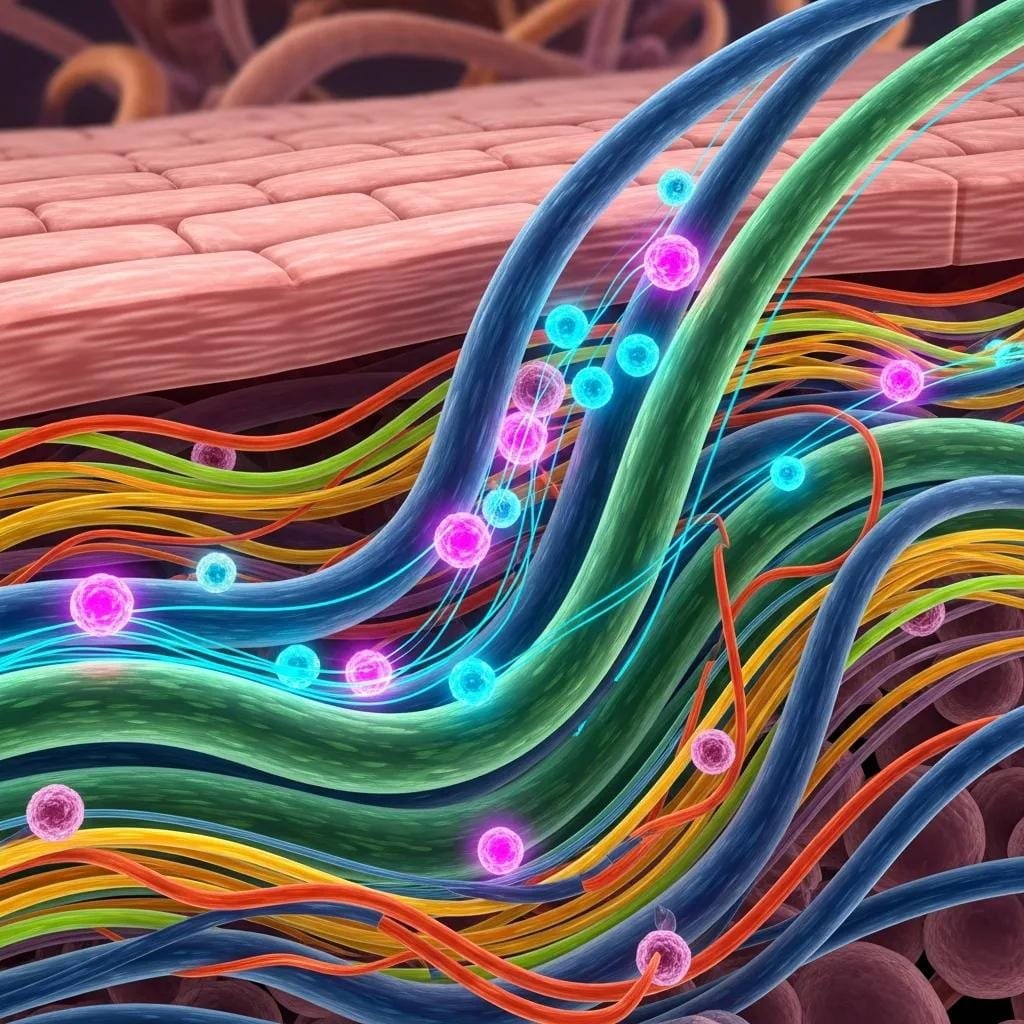
Exosomes promote collagen and elastin synthesis by delivering growth factors and regulatory RNAs that activate fibroblast proliferation and extracellular matrix gene expression. Mechanistically, exosomal signals upregulate transcriptional programs and signaling cascades—such as TGF‑β/SMAD pathways—that increase collagen I/III production and support elastin fiber maintenance, improving dermal tensile strength and elasticity. Translating these molecular changes into patient results, a denser collagen network softens fine lines and sagging, while improved elastin restores bounce and contour over weeks to months. Controlled studies have measured increases in collagen markers and better skin biomechanical properties after exosome‑assisted therapies, indicating durable remodeling when paired with appropriate maintenance. Understanding these steps helps set realistic expectations for timing and visible change.
What Are the Key Benefits of Exosome Therapy for Anti‑Aging Skin Care?
Exosome therapy delivers focused biological signals that promote structural repair, reduce inflammation and restore skin function—producing both cosmetic and functional anti‑aging benefits. The treatment supports collagen regeneration, boosts elasticity, softens fine lines and improves overall tone and radiance by modulating repair and inflammatory pathways. Patients also experience faster recovery after procedures and stronger barrier function that helps maintain hydration and glow. Below is a concise mapping of biological targets to the patient benefits they produce.
Different biological targets map directly to common patient benefits:
| Biological Target | Effect | Patient Benefit |
|---|---|---|
| Collagen (I/III) | Increased synthesis via fibroblast activation | Firmer skin, reduced fine lines |
| Elastin fibers | Improved maintenance and organization | Better elasticity and skin resilience |
| Anti‑inflammatory cytokines | Lowered inflammatory signaling | Less redness and quicker recovery |
| Exosomal miRNA | Gene expression shifted toward repair | Smoother texture and more even tone |
This table links microscopic, exosome‑driven changes to the visible improvements patients notice.
Practical benefits patients commonly report over time include:
- Firmness and Volume Support: Signaling that encourages collagen deposition and restores dermal thickness.
- Texture Smoothing: ECM remodeling that refines the skin’s surface.
- Reduced Inflammation: Anti‑inflammatory cargo that shortens recovery and soothes reactive skin.
- Improved Hydration and Barrier: Epidermal repair that enhances moisture retention and natural radiance.
Together, these effects explain why exosomes are a valuable adjunct in regenerative skin protocols. The next section covers how treatments are administered in clinical practice.
Reducing Fine Lines, Wrinkles, and Improving Skin Texture
Exosomes reduce fine lines and wrinkles by encouraging dermal remodeling and new collagen deposition that fills creases from within, improving surface texture and smoothness. The process relies on fibroblast activation and extracellular matrix reorganization that gradually restores support beneath the epidermis; visible improvements typically begin several weeks after treatment and continue over months as the matrix remodels. Clinically, many patients notice incremental changes by 4–6 weeks, with clearer benefits after a series of sessions that allow cumulative signaling. Expect progressive enhancement rather than instant volumization—this guides optimal scheduling and strategic combination with resurfacing for maximal texture gains.
Enhancing Skin Hydration, Barrier Function, and Radiance
Exosomal signals support epidermal repair and lipid barrier restoration by influencing keratinocyte behavior and inflammatory mediators that control barrier integrity and moisture retention. A healthier barrier reduces transepidermal water loss and improves the performance of moisturizers and topical actives, while lower inflammation yields clearer, more luminous skin. Mechanistically, exosomal growth factors encourage keratinocyte proliferation and differentiation that rebuild a robust stratum corneum—seen clinically as smoother, plumper skin with improved glow. These functional gains complement structural collagen remodeling and are best sustained with supportive skincare and lifestyle habits.
How Is Exosome Therapy Administered and What Can Patients Expect?
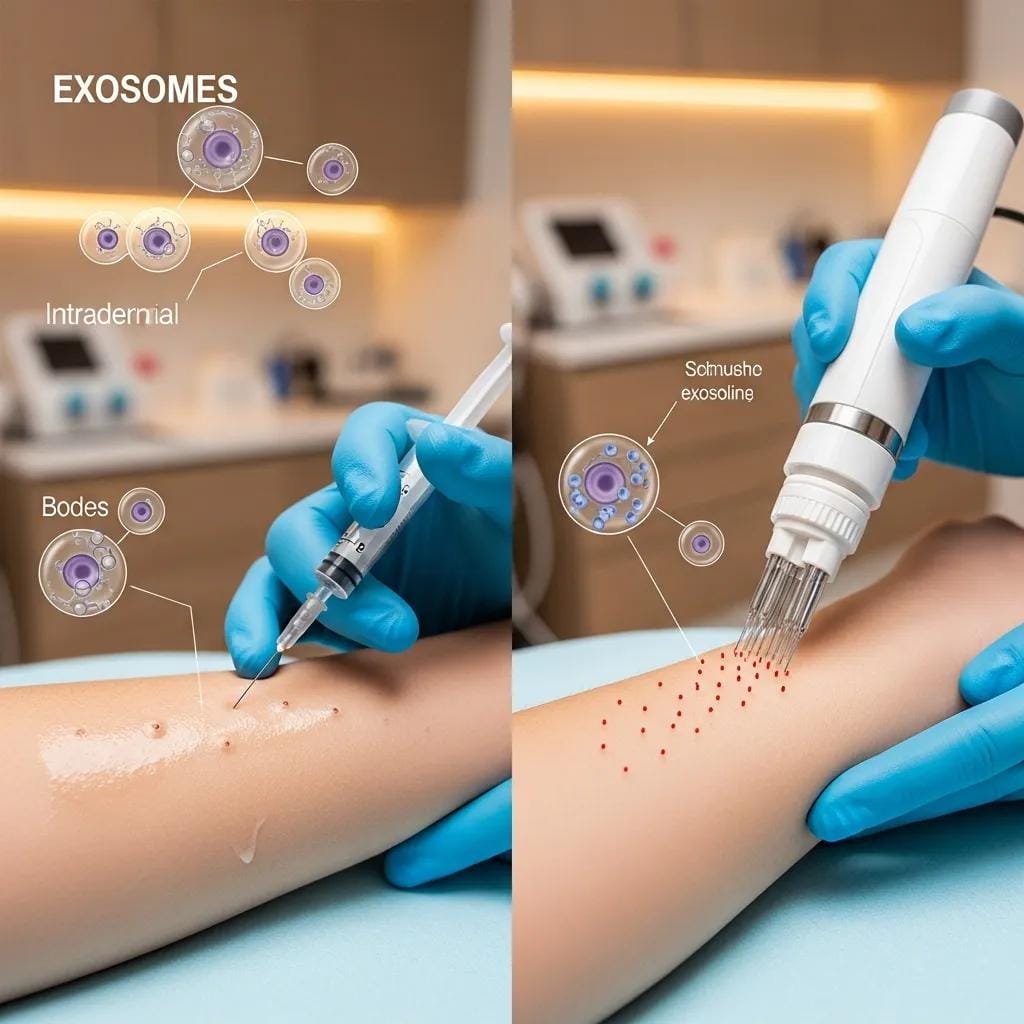
Exosome therapy is delivered using several proven modalities—direct intradermal injections, microneedling‑assisted delivery, or hybrid combination protocols—each aimed at maximizing payload delivery to target skin layers and initiating regenerative signaling. A typical visit includes a skin assessment, optional topical anesthetic, delivery of the exosome formulation via microinjections or through microneedling channels, and immediate post‑procedure care to manage inflammation and support healing. Downtime is generally minimal—transient redness or mild swelling that resolves in days—and most protocols use multiple sessions spaced several weeks apart to build cumulative effect. Because exosomes act through signaling rather than volumization, clinicians focus on penetration depth, sequencing and adjunctive measures to optimize cellular uptake and sustained remodeling.
Common delivery options and rationale are summarized below to help patients choose the right approach:
Intro: This table compares common delivery methods, typical session details and expected downtime so patients can plan logistics and recovery.
| Procedure | Typical Session | Downtime |
|---|---|---|
| Intradermal exosome injections | 30–60 minutes; targeted microinjections | Minimal; redness 1–3 days |
| Microneedling + exosomes | 45–90 minutes; channels enhance penetration | Mild erythema 1–5 days |
| Combination with resurfacing | 60–120 minutes; staged protocols | Variable; plan 3–7 days if resurfacing included |
Summary: Choose a delivery method that balances desired depth of effect with acceptable downtime—combined approaches often improve penetration and results while keeping recovery manageable.
Clinics that embed exosome therapy within holistic regenerative workflows provide straightforward pre‑ and post‑care to improve outcomes. Pre‑treatment guidance often stresses good skin hydration and pausing strong retinoids in the days before treatment; post‑care emphasizes gentle cleansing, sun protection and anti‑inflammatory support. Most patients follow a short series—commonly two to four sessions, depending on baseline condition—with progressive improvement that tracks with ECM remodeling. Integrative providers can design session cadence and combinations that reflect systemic health, lifestyle and aesthetic goals.
Overview of Treatment Procedures: Injections, Microneedling, and Combination Therapies
Injections place concentrated exosomal formulations directly into the dermis for focal rejuvenation, while microneedling creates microchannels that allow topical exosomes to penetrate more evenly across larger areas. Choice depends on goals: injections suit targeted lines and localized support, whereas microneedling plus exosomes is ideal for global texture, tone and diffuse thinning. Combination protocols—alternating or pairing modalities—can amplify signaling by first provoking a controlled microinjury to recruit repair processes, then supplying exosomal instructions to bias healing toward regeneration. Comfort measures such as topical anesthetic and cooling improve tolerability, and careful patient selection (skin type, sensitivity, prior procedures) optimizes safety.
Minimal Downtime and Healing: Accelerating Recovery and Reducing Inflammation
Expected side effects are usually short‑lived and include mild erythema, pinpoint bleeding with microneedling and occasional tenderness that clears in days; serious adverse events are uncommon when treatments are delivered by trained clinicians using quality formulations. Exosomal cargo frequently contains anti‑inflammatory mediators that can temper post‑procedure inflammation and may speed visible recovery compared with purely injurious modalities. A practical recovery timeline is: 0–3 days for acute redness and sensitivity, 3–7 days for epidermal smoothing and reduced irritation, and 1–4 weeks for early collagen remodeling and texture improvement. Conservative aftercare—sun protection, gentle cleansers and avoiding harsh actives—supports healing and long‑term results. Contact your provider for any prolonged or unusual reactions.
How Does Exosome Therapy Compare to PRP and Other Regenerative Treatments?
Exosome therapy and PRP both use biological signaling to promote skin repair, but they differ in source, payload consistency and mechanism. PRP delivers platelet‑derived growth factors from the patient’s blood, while exosomes deliver a standardized vesicle‑based signaling mix often derived from cultured cells. In practice, exosomes can provide a broader and more consistent signaling payload that is cell‑free—an advantage for patients with low platelet function or when standardized dosing is desired. PRP remains a valuable autologous option with a strong safety record and is often combined with exosomes for additive effects. Safety, regulatory considerations and clinical goals guide the choice between these approaches; the table below summarizes key differences to help decision‑making.
Intro to comparison table: The following table presents a concise comparison of mechanisms, downtime and typical results to help guide treatment choice.
| Approach | Mechanism | Typical Results |
|---|---|---|
| Exosomes | Deliver growth factors, peptides and miRNA via extracellular vesicles | Consistent signaling; improved collagen and reduced inflammation |
| PRP | Concentrated platelets release growth factors from autologous blood | Autologous stimulation; potency varies with patient biology |
| Combination (PRP + Exosomes) | Dual signaling from patient platelets and exosomal cargo | Potentially synergistic remodeling across pathways |
Summary: The right choice depends on whether you prioritize standardized, cell‑free signaling or strictly autologous approaches—sometimes the best strategy is a tailored combination.
Advantages of Exosome Therapy Over Platelet‑Rich Plasma
Exosomes often deliver more standardized potency and a wider signaling repertoire—including regulatory RNAs—that can enhance fibroblast activation and ECM remodeling beyond platelet growth factors alone. For patients with impaired platelet function or when reproducible dosing matters, exosomes are an attractive, cell‑free alternative that can be characterized for specific cargo profiles. Evidence suggests exosomes may produce more uniform responses across patients, although combining PRP with exosomes remains a thoughtful option to leverage both autologous signals and exosomal precision. In practice, exosomes are favored when standardization and anti‑inflammatory signaling are priorities; PRP is chosen when an entirely autologous route is preferred.
Integrating Exosome Therapy with Existing Regenerative Medicine Services
Exosomes fit naturally into holistic regenerative plans that also use PRP, hormone optimization and systemic supports by sequencing therapies to precondition tissue and sustain repair signals. A common approach is to prepare skin with resurfacing or PRP to stimulate circulation, then apply exosomes to guide healing toward regeneration, followed by maintenance therapies and lifestyle interventions to preserve gains. Cross‑disciplinary planning—addressing nutrition, sleep and hormonal influences—amplifies durable results. Experienced practitioners use sequencing and combination logic to personalize protocols and prolong the clinical benefits of exosome‑driven remodeling.
Why Choose Dr. Fred Bloem’s Holistic Approach to Exosome Therapy?
At Internal Healing and Wellness MD, Dr. Fred Bloem applies an integrative regenerative philosophy that prioritizes root‑cause evaluation and personalized protocols—placing exosome therapy within a broader plan for lasting skin health. Our Kensington, MD clinic emphasizes whole‑person assessment—skin condition, systemic inflammation and hormonal status—before recommending staged regenerative protocols that may include exosomes alongside other modalities. This patient‑centered approach supports informed decisions and aligns timing with systemic optimization to improve both outcomes and longevity. For patients seeking individualized planning, a consultation explores tailored protocols and sequencing that reflect each person’s goals and medical context.
Personalized Treatment Protocols for Optimal Skin Health and Anti‑Aging
Personalized protocols account for skin type, degree of photodamage, inflammatory status and systemic factors such as hormone balance when designing exosome‑based regimens. Assessments typically include a clinical skin exam, medical history and review of prior procedures to select the best delivery methods and session cadence. Example flow: assessment → tailored delivery (injections, microneedling or combination) → series of treatments spaced for remodeling → maintenance visits and lifestyle guidance. Follow‑up uses objective and subjective tracking to refine protocols and sustain improvements—this individualized framework separates integrative care from one‑size‑fits‑all approaches.
Combining Exosome Therapy with Holistic and Integrative Medicine Practices
Integrative care supports exosome outcomes by addressing nutrition, sleep, hormonal balance and inflammatory drivers that affect skin regeneration—positioning exosome therapy as one part of a broader strategy rather than a lone fix. Lifestyle factors like adequate protein for collagen synthesis, restorative sleep for repair cycles and systemic inflammation control influence how durable exosome‑driven remodeling will be. Framing exosomes within this context helps patients adopt maintenance measures that prolong benefits and reduce the need for repeated invasive procedures. This combined strategy aligns procedural work with whole‑person care to maximize both aesthetic and functional skin health.
What Are Common Questions About Exosome Therapy for Skin Rejuvenation?
Patients frequently ask about durability, risks, candidacy and cost; clear, evidence‑based answers help set realistic expectations and support safe choices. Results vary with baseline skin quality, age and maintenance, with many patients seeing meaningful improvement for months to a year or longer when combined with lifestyle measures and periodic touch‑ups. Side effects are usually mild and temporary—redness, swelling and tenderness—while rare inflammatory or allergic reactions highlight the need for clinician screening and informed consent. Cost depends on clinic, protocol complexity and number of sessions; prospective patients should discuss individualized plans and expected course during consultation.
How Long Do Exosome Therapy Results Last?
Results from exosome therapy develop over weeks and can last months to more than a year depending on age, skin condition, environmental exposures and maintenance. Predictable longevity requires supportive lifestyle habits and occasional boosters. Factors that extend durability include good overall health, strict UV protection and adjunctive therapies that support collagen and elastin; factors that shorten effects include smoking, chronic inflammation and unmanaged systemic disease. Common maintenance recommendations include periodic booster sessions, daily sun protection and metabolic or hormonal optimization to preserve dermal structure and prolong visible benefits.
Are There Any Side Effects or Risks Associated with Exosome Therapy?
Typical side effects are short‑lived—localized redness, mild swelling and transient sensitivity—that usually resolve within days to a week; serious complications are uncommon when qualified providers use proper screening and aseptic technique. Rare risks can include inflammatory or allergic reactions, underscoring the importance of product quality and clinician evaluation. Risk‑reduction strategies include pre‑treatment screening for contraindications, conservative initial dosing to assess tolerance and clear aftercare to lower infection risk and support recovery. Patients should report prolonged pain, increasing redness or systemic symptoms so clinicians can evaluate and manage any concerns promptly.
- Common Side Effects: Redness, swelling and mild tenderness that resolve quickly.
- Rare Risks: Allergic or inflammatory reactions that require clinician assessment.
- Mitigation: Thorough screening, conservative dosing and clear aftercare instructions.
These points define safety expectations while emphasizing clinician oversight and informed consent for the best outcomes.
Frequently Asked Questions
What is the typical recovery time after exosome therapy?
Recovery is usually brief. Most patients experience mild redness and light swelling that settles within 1–5 days, depending on delivery method. Intradermal injections often mean quicker recovery; microneedling can produce more visible erythema. Follow post‑care advice—sun protection and gentle cleansing—to support healing. Most people return to regular activities quickly, making exosome therapy a convenient rejuvenation option.
How does exosome therapy integrate with other skin treatments?
Exosomes combine effectively with treatments like PRP and laser resurfacing. Practitioners may prepare the skin with one modality to stimulate circulation, then apply exosomes to guide regenerative healing—creating a synergistic pathway to address multiple concerns at once. Combination plans are customized to individual goals and skin needs for optimal aesthetic and functional results.
Can exosome therapy be used for all skin types?
Exosome therapy is suitable for a broad range of skin types, including sensitive and mature skin, but candidacy requires individual assessment. Active infections, unstable inflammatory skin conditions or certain medical issues may require postponement. A qualified practitioner will evaluate your skin history and overall health to tailor a safe, effective plan.
What lifestyle changes can enhance the results of exosome therapy?
To get the most from exosomes, prioritize a nutrient‑rich diet with adequate protein, stay hydrated, get restorative sleep and protect skin from UV exposure. Avoid smoking and manage systemic inflammation through lifestyle and medical care when needed. Regular follow‑ups and a consistent skincare routine also help maintain outcomes.
How does exosome therapy compare in cost to other skin rejuvenation treatments?
Cost varies by practice, protocol complexity and number of sessions. Exosome therapy can be comparable to or modestly higher than PRP or laser treatments because of advanced processing and materials. Discuss pricing, package options and financing during your consultation to evaluate value relative to expected longevity and results.
What should patients expect during their first exosome therapy session?
Your first session begins with a detailed skin assessment and goal discussion. We typically apply topical anesthetic to minimize discomfort, then deliver exosomes by injections or microneedling. Sensations are usually mild and well tolerated. You’ll receive clear aftercare instructions to support healing. The initial visit establishes the treatment plan and sets expectations for follow‑up sessions.
Conclusion
Exosome therapy offers a science‑driven, regenerative route to skin rejuvenation—using cellular communication to stimulate collagen and elastin synthesis for firmer, more radiant skin. Beyond smoothing fine lines and improving texture, exosomes reduce inflammation and support overall skin health when used within a personalized protocol. With a holistic plan that includes lifestyle supports and maintenance, patients can achieve durable, natural‑looking results. To explore whether exosome therapy fits your goals, schedule a consultation with our team and we’ll design a plan tailored to your skin and health.