

Unlock the Power of Exosomes for Advanced Hair Regrowth
Exosome therapy is a regenerative, non‑surgical treatment that uses cell‑derived extracellular vesicles to wake up hair follicles, improve scalp health, and encourage new growth with minimal downtime. This guide explains what exosomes are, how MSC‑derived preparations deliver growth factors and microRNA to the follicular niche, and why that signaling can help reverse thinning. You’ll find clear, evidence‑informed explanations of the biology, summaries of recent clinical findings, step‑by‑step expectations for the procedure, and practical comparisons with PRP, minoxidil, finasteride, and surgical grafting. We also outline realistic timelines for visible change, maintenance strategies, and how to schedule a personalized consultation. Throughout, terms such as exosomes hair growth, hair follicle regeneration, and non‑surgical hair restoration are used to help both clinicians and patients evaluate whether exosome therapy fits their goals.
What Is Exosome Therapy and How Does It Promote Hair Regrowth?
Exosome therapy delivers tiny extracellular vesicles—natural cellular messengers—that carry concentrated growth factors, cytokines, and regulatory RNAs into the scalp. MSC‑derived exosomes act as biological couriers: they reduce inflammation, support new blood vessel formation (angiogenesis), and stimulate dermal papilla cells to reawaken follicle cycling and boost hair shaft production. Recent studies through 2023–2024 report measurable improvements in hair density and thickness when exosome products are delivered by injections or combined with microneedling. Understanding these mechanisms shows why exosomes are positioned as a targeted, non‑surgical option that can complement other supportive therapies. The sections that follow break down exosome biology and connect cellular action to real‑world scalp outcomes.
What Are Exosomes and Their Role in Cellular Communication?
Exosomes are extracellular vesicles about 30–150 nm wide that shuttle proteins, lipids, and nucleic acids between cells, enabling focused intercellular communication and tissue regulation. Many cell types release exosomes, and mesenchymal stem cell (MSC)‑derived exosomes are highlighted therapeutically because they carry a rich mix of growth factors and regulatory microRNAs that support repair and regeneration. On the scalp, exosomes deliver targeted signals that lower inflammation, support stem cell niches, and encourage vascular growth—creating a healthier environment for hair follicles. Recent work (through 2023) documents exosome stability and paracrine effects, and when sourced from quality‑controlled manufacturers, these products show a favorable safety profile. Grasping this cellular messaging system makes it easier to see how precise delivery can lead to visible hair improvements.
How Do Exosomes Stimulate Hair Follicle Regeneration and Scalp Health?
Exosomes promote follicle regeneration by delivering growth factors and regulatory RNAs that activate dermal papilla cells, increase angiogenesis, and dampen pro‑inflammatory signals that block follicle cycling. Their cargo supports cell proliferation, extracellular matrix remodeling, and new capillary formation—steps that improve nutrient and oxygen flow to follicles and shorten the telogen (resting) phase. Together, follicle activation, better perfusion, and reduced inflammation can lead to thicker, denser hair across successive growth cycles. Clinical reports and early trials up to 2023 report consistent improvements in hair count and shaft diameter that align with these mechanisms. These biological effects help clinicians translate molecular action into practical procedural protocols and patient expectations.
What Are the Key Benefits of Exosome Therapy for Hair Loss Treatment?
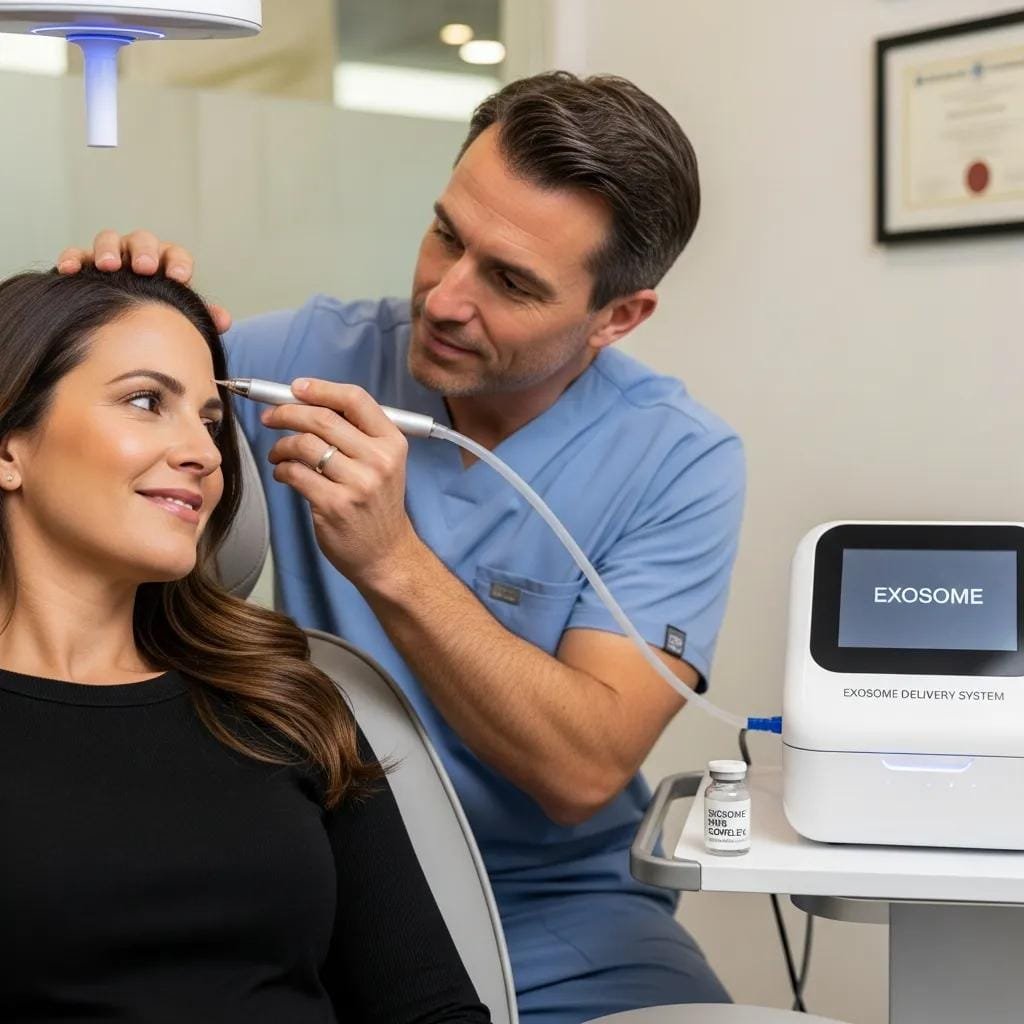
Exosome therapy delivers focused regenerative signals to the follicle niche, which can increase hair density and thickness while avoiding surgery and minimizing downtime. Many patients report improved scalp comfort and reduced inflammation, alongside better microcirculation that supports sustained follicle activity and overall hair quality. Unlike systemic medications, exosomes provide localized biological cues that encourage natural‑looking regrowth and work well within broader, holistic treatment plans that may include topical or oral adjuncts.
Core benefits of exosome therapy include:
- Increased hair density: Signals encourage dormant follicles to re‑enter the growth phase.
- Improved hair thickness: Follicular stimulation supports larger shaft caliber and improved coverage.
- Enhanced scalp health: Anti‑inflammatory and angiogenic effects create a healthier microenvironment.
- Minimal downtime: Office‑based procedures typically require only brief recovery.
- Natural aesthetic results: Regenerative signaling promotes gradual, natural‑appearing regrowth.
These advantages make exosome therapy an appealing option for patients seeking regenerative, non‑surgical restoration. The table below links common exosome components to their functional and clinical effects.
This table connects exosome cargo to mechanisms and expected clinical benefits.
| Exosome Factor | Mechanism | Clinical Benefit |
|---|---|---|
| Growth factors (e.g., VEGF‑like activity) | Stimulate angiogenesis and increase local blood flow | Better follicle perfusion and nutrient delivery |
| miRNA species | Regulate gene expression in dermal papilla and follicle cells | Improved follicle cycling and reduced cell death |
| Anti‑inflammatory cytokines | Quiet scalp inflammation | Less follicle miniaturization and healthier scalp tissue |
| Extracellular matrix proteins | Support tissue remodeling and structural integrity | Stronger follicle anchoring and fuller shaft caliber |
This EAV summary clarifies how concentrated exosome signals translate into measurable scalp and hair improvements, helping set realistic expectations and guide clinical planning.
At Internal Healing and Wellness MD, Dr. Fred Bloem integrates exosome therapy into holistic hair restoration plans tailored to each patient’s scalp assessment and goals. The practice emphasizes individualized sequencing of regenerative modalities alongside supportive scalp care. To schedule a focused evaluation, prospective patients may call the clinic at (301) 260-2601 or visit the Kensington, MD office for a personalized protocol. This approach ensures clinical benefits are delivered within a patient‑centered plan.
How Does Exosome Therapy Improve Hair Density and Thickness?
Density and thickness gains come from coordinated cellular responses that lengthen the anagen (growth) phase and stimulate dermal papilla expansion. Exosome cargo—growth factors and miRNAs—upregulates pathways involved in shaft production and follicle size, producing measurable increases in hairs per square centimeter and shaft diameter over months. Recent literature reports consistent trends toward thicker hair and improved coverage; individual outcomes depend on age, baseline follicle health, and treatment protocol. Anonymized patient examples often show progressive density gains over 6–12 months when exosome sessions are paired with dedicated scalp care. These outcome patterns help clinicians set realistic expectations and plan follow‑up care.
What Advantages Does Exosome Therapy Offer Over Other Hair Restoration Methods?
Exosome therapy delivers mechanism‑specific signaling that directly targets follicle biology, which differs from broader approaches such as topical minoxidil or oral finasteride. Compared with hair transplantation, exosomes are non‑invasive, require less downtime, and may enhance native follicle function without grafting. Against PRP, exosome products offer a standardized, off‑the‑shelf concentration that removes variability tied to individual blood draws. These characteristics make exosomes suitable for patients seeking targeted, low‑downtime regenerative options and for those who prefer to combine treatments within an integrative care plan. The next section outlines how clinicians translate these benefits into practical procedures.
How Is the Exosome Hair Regrowth Procedure Performed?

A typical exosome hair‑regrowth visit starts with a focused scalp assessment and medical history review to select the best delivery method and session cadence for your pattern of loss and goals. Common delivery options include intradermal microinjections and microneedling‑assisted topical application to improve uptake; both aim to concentrate exosome cargo in the follicle niche. Treatments are performed in‑office with topical numbing for comfort, and most patients experience only brief redness or tenderness afterward.
The patient journey commonly follows these steps so you know what to expect before, during, and after treatment:
- Pre‑treatment evaluation: Clinician documents hair loss pattern and medical history to confirm candidacy.
- Preparation and numbing: Topical anesthetic is applied for comfort during delivery.
- Delivery: Exosomes are placed by microinjection or applied with microneedling to enhance penetration.
- Post‑procedure care: Simple guidance—avoid harsh scalp products and follow clinician instructions for a few days.
This clear, stepwise flow supports predictable visits, good adherence, and optimal outcomes.
Expect most appointments to last under 60 minutes and for most patients to return to normal activities immediately. Mild redness and tenderness are common and resolve in days; visible hair changes appear over months as follicles respond. Clinicians should monitor progress and refine protocols during follow‑up visits to maximize regenerative signaling and long‑term results.
What Should Patients Expect Before, During, and After Treatment?
Before treatment you’ll have a clinical evaluation with photos and a candid conversation about goals and timelines—this aligns expectations and identifies any contraindications. During the procedure, topical numbing minimizes discomfort while the clinician uses injections or microneedling‑assisted application based on your scalp and objectives. After treatment you may notice mild redness, pinpoint bruising, or tenderness that usually resolves within days; clear aftercare instructions help reduce irritation and support product uptake. Follow‑up visits let your clinician track response and add adjunctive therapies if needed, creating an iterative plan to optimize follicle regeneration. Knowing this trajectory helps you plan practically and mentally for your course of care.
What Are the Safety Considerations and Potential Side Effects?
Safety depends on careful patient selection, reputable product sourcing, and skilled clinician technique. Common short‑term effects include local redness, swelling, and tenderness at treatment sites—these typically resolve within a few days with conservative care. Contraindications such as active scalp infection or uncontrolled medical conditions are screened during intake to reduce risk, and using ethically sourced, quality‑controlled exosome preparations helps minimize immunogenic concerns. Serious adverse events are rare when qualified clinicians follow established protocols and informed consent processes. Ongoing clinician oversight and transparent communication remain central to a favorable safety profile for regenerative scalp treatments.
For patients in the Washington, DC area, Internal Healing and Wellness MD offers individualized procedural planning led by Dr. Fred Bloem, combining regenerative medicine with integrative scalp health strategies. The clinic provides comprehensive assessments and personalized scheduling to match protocol intensity to patient goals. Interested individuals can call (301) 260-2601 or visit 10400 CONNECTICUT AVE STE 206, Kensington MD for an evaluation. This local, patient‑focused approach keeps safety and personalization front and center.
How Does Exosome Therapy Compare to PRP and Other Hair Loss Treatments?
Exosome therapy differs from PRP, topical agents, and systemic medications mainly by source, mechanism, and standardization. Exosomes are cell‑derived vesicles delivering concentrated signaling molecules; PRP uses the patient’s platelets and growth factors and can vary between sessions. Topical minoxidil and oral finasteride work through pharmacologic pathways that modulate the hair cycle or hormones, while surgical transplantation relocates follicles mechanically. Each option carries trade‑offs in invasiveness, downtime, and maintenance; exosomes occupy a distinct niche as a non‑surgical regenerative choice that can be combined with other therapies for synergy. The table below summarizes mechanism, invasiveness, downtime, and typical cost context to help guide decisions.
The following comparison outlines mechanism, invasiveness, downtime, and typical cost context for common hair loss treatments.
| Treatment | Mechanism / Invasiveness / Downtime | Typical Cost Range |
|---|---|---|
| Exosome Therapy | Cell‑derived signaling vesicles; office injections or microneedling; minimal downtime | Variable by protocol; clinician estimate required |
| PRP | Autologous platelets and growth factors from a blood draw; injections; mild downtime | Often lower than surgical options; clinic‑dependent |
| Minoxidil (topical) | Topical vasodilator; non‑invasive; ongoing use required | Lower ongoing expense |
| Finasteride (oral) | Hormonal modulation; systemic medication; minimal procedural downtime | Recurring medication cost |
| Hair Transplant Surgery | Surgical relocation of follicular units; significant downtime and recovery | Higher one‑time procedural cost |
What Are the Differences Between Exosome Therapy and PRP?
Both exosomes and PRP aim to stimulate follicular activity, but they differ in preparation, consistency, and focus. PRP uses the patient’s own blood to concentrate platelets and growth factors, which can vary with individual biology and processing methods. Exosome products are manufactured to deliver a consistent concentration of signaling vesicles without a blood draw, reducing session‑to‑session variability and simplifying clinic workflow. The evidence base is evolving for both approaches; choice often depends on prior responses, patient preference, and clinician judgment. Understanding these differences helps match the right tool to the patient’s goals and biological readiness.
Why Choose Exosome Therapy for Non-Surgical Hair Restoration?
Exosome therapy is a strong option for patients seeking regenerative, mechanism‑targeted treatment without surgery and with minimal downtime. It fits well for people with early‑to‑moderate thinning, those looking to enhance previous procedures, or patients who prefer to avoid systemic medication side effects. Combination strategies—pairing exosomes with topical agents, PRP, or microneedling—are often used for additive effects, and a personalized assessment will determine the optimal plan. For many patients, the ability to target follicle biology while preserving a natural hairline makes exosome therapy an attractive non‑surgical choice.
What Is the Expected Timeline and Longevity of Results from Exosome Therapy?
Patients usually notice incremental scalp improvements within weeks and visible hair changes over months as follicles move through growth cycles. Early gains often show as better scalp texture and reduced miniaturization; peak density and thickness gains typically appear later. Results vary with age, extent of hair loss, general health, and the chosen protocol plus adjunctive measures. Maintenance sessions and supportive scalp care can prolong benefits; periodic touch‑ups help sustain improvements. The table below maps common timeline stages to expected clinical changes so you can set realistic expectations.
| Stage | Typical Timeframe | Clinical Expected Changes |
|---|---|---|
| Early response | 0–3 months | Improved scalp texture and reduced inflammation |
| Noticeable growth | 3–6 months | Fine new hairs and increasing shaft caliber |
| Peak improvement | 6–12 months | Visible density gains and thicker hair shafts |
| Maintenance | 12+ months | Sustained results with periodic touch‑ups and scalp care |
When Do Patients Typically See Hair Regrowth Improvements?
Many patients notice improved scalp comfort—less flaking or irritation—within the first few weeks. Visible hair regrowth generally appears between three and six months as follicles re‑enter anagen and produce new shafts. Peak improvements are commonly seen between six and twelve months when density and shaft thickness become more apparent. Response varies: younger patients and those with less advanced miniaturization often progress faster, while long‑standing, extensive loss may require combination approaches or longer monitoring. Framing these milestones helps maintain realistic expectations and supports adherence to follow‑up care.
How Can Results Be Maintained Over Time?
Maintaining gains from exosome therapy typically requires scheduled maintenance sessions, ongoing scalp care, and attention to systemic contributors that affect follicle health. Recommended steps include periodic booster treatments based on clinical response, gentle scalp hygiene to reduce inflammation, and adjunctive topical or oral therapies when appropriate. Lifestyle factors—nutrition, stress management, and treating underlying medical issues—also influence longevity. Clinicians create individualized follow‑up schedules to help preserve results and optimize long‑term stability.
Practical maintenance steps patients can follow:
- Schedule periodic touch‑ups: Follow your clinician’s recommended interval for boosters.
- Preserve scalp health: Use gentle cleansers and avoid irritants after procedures.
- Address systemic factors: Support hair health with balanced nutrition, sleep, and management of medical conditions.
How Can You Schedule a Consultation and What Are the Costs Involved?
Booking a consultation usually begins with an intake that documents hair‑loss history, photos, and medical background, followed by an in‑person scalp exam to confirm candidacy and recommend a tailored protocol. Cost depends on treatment area size, number of sessions, product selection, and clinic expertise; clinicians provide individualized estimates after evaluation.
Common factors that influence cost include:
- Treatment area size: Larger areas require more product and clinic time.
- Number of sessions: Most protocols involve multiple visits for optimal effect.
- Product quality and sourcing: Standardized, quality‑controlled exosome preparations affect pricing.
These cost drivers guide transparent conversations during consultation so patients can plan financially for a personalized course of care.
When you’re ready, Internal Healing and Wellness MD provides consultative evaluations with Dr. Fred Bloem at the Kensington, MD office. The clinic uses a patient‑centered intake process and will offer a tailored estimate after assessment. Call (301) 260-2601 or visit 10400 CONNECTICUT AVE STE 206, Kensington MD to arrange an appointment and begin your personalized plan.
What Factors Influence the Cost of Exosome Hair Treatment?
Price is mainly driven by product selection, treatment area, number of sessions, and the clinic’s expertise and local market. High‑quality, ethically sourced exosome preparations and precise delivery techniques can increase upfront cost but may improve consistency and outcomes. Combining exosomes with microneedling or other adjuncts adds to procedural complexity and pricing, and maintenance schedules affect long‑term expenses. Discussing these factors during your consultation ensures transparent expectations and helps the clinician recommend a cost‑effective, clinically appropriate plan.
How to Prepare for a Personalized Exosome Therapy Consultation?
Bring a concise medical history, a list of current medications, and photos that document hair‑loss progression; this information helps the clinician establish a baseline and spot contraindications. Prepare questions about expected timelines, maintenance, and potential adjunctive therapies so you can engage in shared decision making. Expect photographic documentation, a scalp exam, and a personalized recommendation outlining protocol options and cost ranges. Being prepared makes the evaluation more productive and speeds development of your regenerative plan.
Frequently Asked Questions
What is the typical recovery time after exosome therapy?
Recovery is usually brief. Most patients experience mild redness or tenderness at treatment sites that resolves within a few days. Because the procedure is non‑surgical, you can typically resume normal activities right away, though we advise avoiding harsh scalp treatments and strenuous exercise for a short period to support healing and product uptake. Following your clinician’s aftercare guidance helps ensure the best recovery.
Are there any contraindications for exosome therapy?
Yes. Common contraindications include active scalp infections, uncontrolled medical conditions, and pregnancy or breastfeeding. Patients with known allergies to ingredients in a given exosome preparation should discuss alternatives with their clinician. A thorough intake and clinical exam identify any contraindications to keep treatment safe.
How long do the results from exosome therapy last?
Duration varies by individual factors such as age, degree of hair loss, and overall health. Many patients see measurable improvements in density and thickness between 6 and 12 months. Periodic touch‑ups and consistent scalp care can help maintain benefits long term. Your clinician will recommend a maintenance schedule based on your response.
Can exosome therapy be combined with other hair restoration treatments?
Yes. Exosome therapy is often combined with topical agents like minoxidil, systemic treatments such as finasteride, or PRP and microneedling to enhance results. A personalized plan developed during consultation will identify safe and effective combination strategies tailored to your goals.
What should I expect during the consultation for exosome therapy?
The consultation includes a review of your hair‑loss history, scalp exam, and documentation with photos. The clinician will discuss goals, review medical history, and propose a personalized plan with expected timelines, likely outcomes, and cost estimates. This visit is designed to set clear expectations and a shared plan for treatment.
Is exosome therapy suitable for all types of hair loss?
Exosome therapy can help many forms of hair thinning, including androgenetic alopecia and other diffuse thinning patterns. Effectiveness depends on the underlying cause and the extent of follicle miniaturization—early to moderate thinning tends to respond best. A thorough evaluation during consultation will determine whether exosome therapy is appropriate for your situation.
Conclusion
Exosome therapy offers a modern, non‑surgical option for hair restoration that can increase density, improve scalp health, and require minimal downtime. By harnessing targeted regenerative signaling, many patients achieve gradual, natural‑looking improvements that align with their hair restoration goals. If you’re curious whether exosome therapy is right for you, we invite you to schedule a personalized consultation to discuss options and next steps. Take the first step toward revitalizing your hair today.