
Anti‑Aging Medicine & Longevity — Personalized Care in Bethesda, MD
Anti‑aging medicine and longevity care focus on extending healthspan — the years you feel vital and fully functional — not just adding years to your life. Below we explain how functional diagnostics, tailored hormone care, regenerative treatments, detoxification, and individualized lifestyle plans work together to slow biological aging, boost energy, protect cognition, and preserve mobility for people in Bethesda, Kensington, and Montgomery County. You’ll learn how clinicians measure biological age versus chronological age, why addressing root causes matters, how bioidentical hormone therapy and regenerative injections support tissue repair, and what to expect from a personalized longevity program. The information is evidence‑informed and practical for anyone considering an anti‑aging doctor or longevity clinic in Bethesda. After the core concepts, we outline specific therapies, testing workflows, and how a local practice combines these approaches into measurable, patient‑centered plans.
What Is Anti‑Aging Medicine and How Does It Support Longevity?
Anti‑aging medicine treats aging as a changeable biological process. Using targeted diagnostics and interventions, clinicians aim to preserve function and lower disease risk. The practice focuses on identifying and treating drivers of accelerated biological aging — such as chronic inflammation, hormone decline, mitochondrial dysfunction, and toxic exposures — to restore balance and resilience. Growing evidence suggests that a combined approach (functional diagnostics, hormone optimization, regenerative therapies, and metabolic care) can slow markers of biological aging and reduce chronic disease. Understanding these mechanisms helps patients choose therapies that support cellular repair, immune health, and metabolic stability.
Anti‑aging care typically combines several evidence‑based strategies to extend healthspan:
- Functional diagnostics to pinpoint root causes like chronic inflammation or metabolic imbalance.
- Hormone optimization to restore physiologic balance and support muscle, bone, and cognition.
- Regenerative and cellular therapies to encourage tissue repair and reduce chronic pain.
These approaches overlap and inform a personalized plan — which leads into how functional medicine maps root causes for each patient.
How Does Functional Medicine Find and Treat the Root Causes of Aging?
Functional medicine uses a systems‑based approach: a thorough history, focused biomarker testing, and individualized interventions. Clinicians evaluate inflammatory markers, metabolic labs, lipid and glycemic control, hormone profiles, and possible environmental or infectious contributors to build a root‑cause map. Interventions emphasize nutrition, movement, sleep hygiene, stress resilience, toxin reduction, and targeted supplements or therapies that correct measurable dysfunction. The goal shifts from masking symptoms to restoring the physiologic networks that determine healthy aging and provides actionable targets to lower biological‑age metrics. Next, we explain why biological age matters and how it differs from chronological age.
Chronological Age vs. Biological Age — What’s the Difference?
Chronological age is simply years since birth. Biological age estimates physiological wear and resilience using molecular and functional markers. Biological age reflects inflammation, mitochondrial efficiency, telomere health, metabolic control, and epigenetic patterns more than calendar years alone. Clinically useful proxies include CRP and other inflammatory markers, HbA1c and lipid profiles, hormone panels, fitness and gait assessments, and specialized epigenetic or telomere tests. Measuring biological age lets clinicians prioritize therapies that target the specific processes accelerating decline and track objective improvement over time.
How Can Hormone Replacement Therapy Improve Vitality and Longevity?

When individualized and bioidentical, hormone replacement therapy restores physiologic hormone levels that support energy, muscle mass, bone density, mental clarity, and sexual health — all important to a longer healthspan. Addressing deficiencies in testosterone, estrogen, thyroid hormones, or correcting cortisol dysregulation helps reestablish endocrine signaling that often declines with age and contributes to frailty and metabolic slowdown. Careful monitoring and dose personalization reduce risk and increase benefit; integrating BHRT with nutrition, exercise, and regenerative therapies usually improves outcomes. Below is a clear comparison of key hormones, how they work, common symptoms they treat, and why they matter for longevity.
| Hormone | How it helps | Symptoms it addresses |
|---|---|---|
| Testosterone | Supports muscle growth, libido, and metabolic rate | Low energy, decreased strength, low libido, increased fat |
| Estrogen (women) | Protects bone density, vascular health, and skin quality | Hot flashes, sleep disruption, bone loss, vaginal dryness |
| Thyroid hormones | Regulate metabolism and mitochondrial activity | Fatigue, weight gain, cold sensitivity, slowed thinking |
| Cortisol (HPA axis) | Controls stress response and immune balance | Trouble sleeping, low energy, metabolic shifts, mood changes |
Understanding how each hormone influences physiology helps guide monitoring and long‑term safety. The sections that follow describe hormone benefits and considerations by gender.
How Men Benefit from Bioidentical Testosterone Therapy
For men with confirmed testosterone deficiency, bioidentical testosterone can improve energy, sexual function, lean mass, and metabolic markers. Treatment begins with a careful review of symptoms and labs and evaluation of cardiovascular and prostate risk factors, then moves to personalized dosing and routine monitoring to keep levels within physiologic ranges. Improvements often appear over weeks to months and include better mood, clearer thinking, increased exercise tolerance, and body‑composition changes that support longevity. Supervised BHRT minimizes side effects and is most effective when combined with lifestyle strategies to sustain gains.
How BHRT Helps Women Preserve Function and Quality of Life
For women, BHRT tailored to menopausal stage and symptoms can ease hot flashes, improve sleep and mood, protect bone density, and support skin and connective tissue health. Regimens balance estrogen and progesterone based on testing and symptoms while weighing cardiovascular and breast‑health factors in a comprehensive risk assessment. Paired with lifestyle changes, bone‑protective measures, and metabolic optimization, BHRT can preserve function and quality of life — core goals of longevity care. Ongoing monitoring and dose adjustments keep therapy safe and effective as needs change.
Regenerative Therapies to Restore Function and Reduce Pain
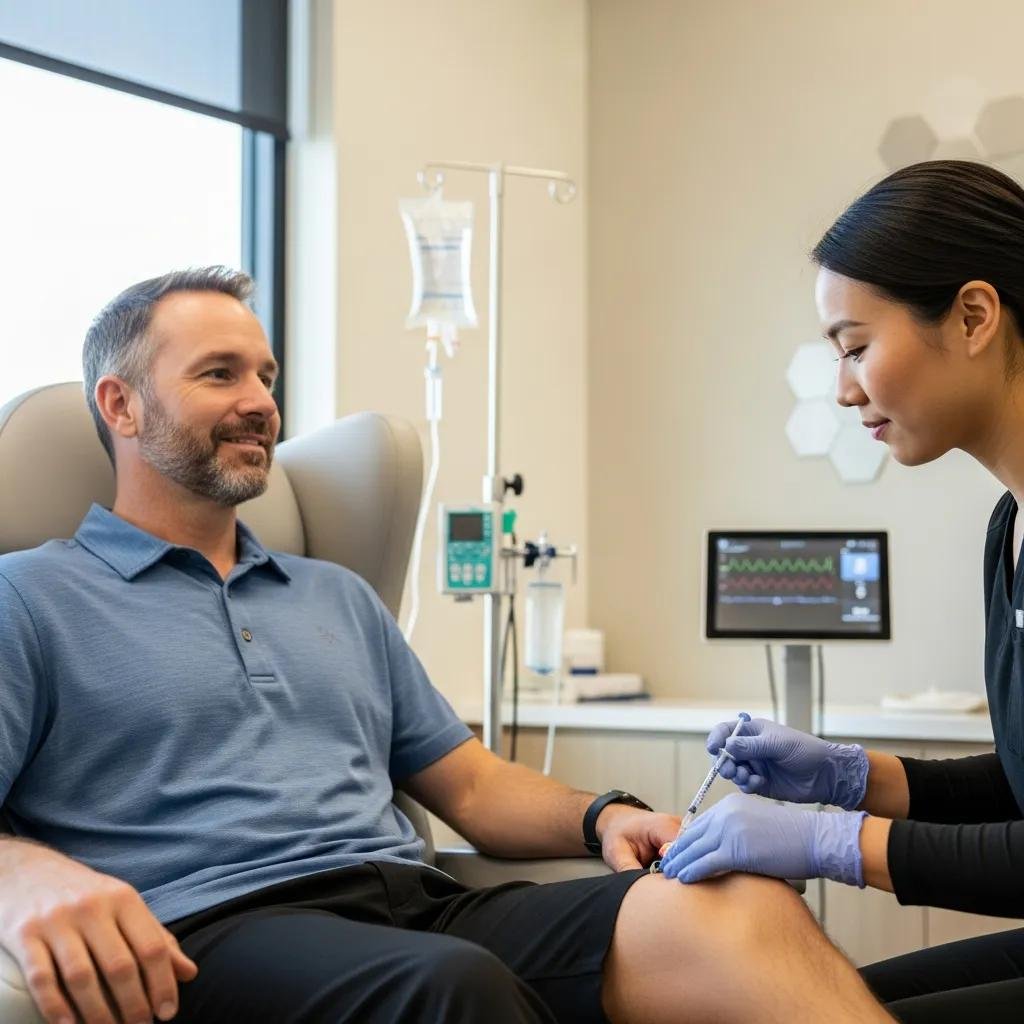
Regenerative medicine uses biologic and bioactive treatments to trigger tissue repair, reduce chronic pain, and improve both appearance and function. Options such as platelet‑rich plasma (PRP), Prolozone (ozone‑oxygen injections), and cellular signaling therapies are used for musculoskeletal repair, skin rejuvenation, and hair restoration by leveraging growth factors and cell signaling. Choice of treatment depends on the tissue and goals; combining injections with rehabilitation and metabolic support usually improves results. The table below compares common regenerative modalities, how they’re performed, and typical indications and outcomes.
| Therapy | Procedure Type | Typical Indications / Expected Outcomes |
|---|---|---|
| Platelet‑Rich Plasma (PRP) | Autologous platelet concentrate injected into targeted tissue | Reduces osteoarthritis symptoms, supports tendon healing, stimulates skin collagen |
| Prolozone Therapy | Ozone‑oxygen injections to ligaments and joints | Pain relief, improved joint stability, better local circulation |
| Stem Cell Approaches | Autologous or concentrated cell‑signaling preparations | Supports soft tissue repair and cartilage health; outcomes vary by case |
These options differ by mechanism and indication; careful patient selection sets realistic recovery expectations and aligns treatments with longevity goals. The next sections explain PRP, Prolozone, and stem‑cell approaches in more detail.
How PRP Supports Joint Healing and Skin Rejuvenation
PRP uses a patient’s own platelets to concentrate growth factors that promote tissue healing, collagen production, and new blood‑vessel growth in damaged tendons, arthritic joints, and aging skin. Clinically, PRP can reduce pain, improve function, and enhance skin texture over a series of treatments spaced weeks apart, with gradual improvements commonly seen within one to three months. Unlike steroid injections that suppress inflammation temporarily, PRP encourages regeneration and is often considered before surgical options for degenerative conditions. Patients should expect monitored treatment plans, adjunctive rehab, and objective measures to track gains.
Where Prolozone and Stem‑Cell Signaling Fit in Anti‑Aging Care
Prolozone delivers a local oxidative stimulus via oxygen‑ozone injections to promote healing, reduce pain, and improve tissue oxygenation — useful for ligament or joint instability and chronic pain. Stem‑cell‑related approaches provide cellular signaling intended to support repair; outcomes depend on the indication, preparation, and patient factors. Realistic goals emphasize symptom relief and functional improvement rather than guaranteed tissue regeneration. Combining these therapies with mechanical rehab and metabolic optimization usually produces the best functional results and supports longevity by restoring activity and mobility.
How Do Detoxification and IV Nutrient Therapies Support Cellular Health?
Detoxification and IV nutrient therapies help lower toxic burden, support cellular metabolism, and deliver concentrated nutrients that bypass gut absorption limits to speed recovery and boost energy. By reducing circulating toxins and replenishing cofactors important for mitochondrial function, antioxidant defenses, and immune resilience, these therapies support cellular repair and reduce inflammatory signaling linked to accelerated aging. Systemic ozone approaches can also modulate immune responses and provide oxidative preconditioning that strengthens cellular stress tolerance. Below is a practical comparison of IV and ozone modalities, their mechanisms, and the longevity benefits they offer.
| Modality | Mechanism | Longevity Benefit |
|---|---|---|
| High‑dose IV vitamin blends | Direct delivery of vitamins, minerals, and amino acids to cells | Supports mitochondrial function and antioxidant defenses |
| NAD+ IV or infusion protocols | Supports cellular energetics and DNA‑repair pathways | Improves mitochondrial efficiency and metabolic resilience |
| Systemic ozone (EBOO / Ten Pass) | Controlled oxidative stimulus to blood and immune system | Immune modulation, detox support, improved oxygen utilization |
These comparisons clarify how IV and ozone therapies target core cellular processes tied to biological age and help clinicians choose the right approach for specific metabolic needs. The following sections outline common IV and ozone protocols and typical patient responses.
What Benefits Can IV Therapies Deliver for Energy and Cellular Repair?
IV therapies provide concentrated combinations of vitamins, minerals, antioxidants, and metabolic cofactors directly into the bloodstream to support mitochondrial health, detox pathways, and immune function. Common formulas include hydration plus vitamin blends for recovery, antioxidant mixes to reduce oxidative stress, and NAD+ infusions to support cellular energy and repair. Many patients notice faster recovery, less fatigue, and clearer thinking within days to weeks, depending on the protocol and starting deficits. Contraindications and individualized dosing require clinical assessment; IV therapy is most effective when part of a comprehensive longevity plan that addresses underlying metabolic drivers.
How Does Ozone Therapy Complement Detoxification and Immunity?
Ozone therapy — given locally or systemically — works through controlled oxidative signaling that boosts antioxidant systems, improves oxygen delivery, and modulates immune responses. Systemic methods like extracorporeal blood/ozone exchange (EBOO) or Ten‑Pass–style procedures produce wider systemic effects for detox and immune balance, while local ozone injections support tissue healing and circulation. Safety and proper patient selection are essential; protocols use measured dosing and monitoring to maximize benefit and minimize risk. When integrated with nutrition and regenerative care, ozone therapies can increase resilience and support long‑term recovery.
What Personalized Longevity Programs Does Dr. Fred Bloem Offer in Bethesda?
Dr. Fred Bloem and Internal Healing and Wellness MD design personalized longevity programs built on detailed assessment, targeted diagnostics, individualized therapies, and ongoing monitoring to optimize healthspan for patients in Bethesda and Kensington. Programs start with a comprehensive intake that maps symptoms, exposures, and functional goals, followed by advanced testing to identify biochemical and physiologic drivers of aging. Therapies are selected from bioidentical hormone protocols, regenerative injections, IV nutrient and ozone therapies, detox strategies, and lifestyle prescriptions aligned with test results. Progress is tracked with objective biomarkers and functional outcomes so the plan can be refined over time.
Patients in Bethesda can expect a stepwise program workflow:
- Intake and Clinical Assessment: In‑depth history and goal setting with the clinician.
- Targeted Diagnostics: Labs and functional testing to uncover drivers of biological age.
- Personalized Protocol: A coordinated plan that may include BHRT, regenerative, IV, ozone, and lifestyle therapies.
- Monitoring and Adjustment: Regular follow‑up to measure outcomes and refine interventions.
These steps provide a clear roadmap from assessment to measurable improvement. The next section explains the testing‑to‑plan workflow that guides personalization.
How Is a Customized Longevity Plan Built from Advanced Testing?
A customized longevity plan follows a clear sequence: assessment to capture symptoms and goals, targeted biomarker testing to quantify metabolic, inflammatory, and hormonal drivers, interpretation that links results to therapeutic options, and an individualized treatment protocol with scheduled reassessments. Typical tests include metabolic panels, inflammatory markers, hormone panels, nutrient status, and functional assessments that together inform therapy choice. This sequence — Assess → Test → Personalize → Monitor — ensures interventions address root causes and that objective measures confirm progress. Monitoring guides dose changes, therapy order, and long‑term maintenance.
What Should Patients Expect During Their Longevity Consultation and Treatment Course?
At the initial consultation, you’ll receive a structured clinical interview, focused physical exam, and orders for targeted diagnostic tests matched to your concerns and goals. Treatment usually begins after results review, with clear explanations of options, risks, timelines, and measurable outcomes. Follow‑up visits monitor labs, function, and patient‑reported outcomes, allowing iterative adjustments to keep you within physiologic targets. Throughout the process, shared decision‑making, patient education, and safety monitoring support adherence and the best chance for sustained improvements in healthspan.
Why Choose Dr. Fred Bloem and Internal Healing and Wellness MD for Anti‑Aging Care?
Internal Healing and Wellness MD offers a holistic, root‑cause approach to anti‑aging and longevity care in Bethesda, combining biooxidative therapies, chronic illness support, and personalized regenerative and hormone strategies to address complex drivers of decline. The practice emphasizes individualized plans guided by advanced diagnostics and coordinated use of BHRT, regenerative injections, IV nutrient support, and detoxification when indicated. Local patients work with a clinician experienced in integrative modalities who frames therapy around measurable outcomes and shared decision‑making. To begin a personalized longevity program, scheduling a consultation is the first step toward objective assessment and a tailored treatment path.
Key advantages of our approach include:
- A holistic, root‑cause diagnostic process aligned with longevity goals.
- Integration of biooxidative and regenerative therapies with hormone optimization.
- Personalized monitoring and iterative adjustments driven by objective markers.
These elements help patients feel confident pursuing a coordinated longevity plan. The following section summarizes the clinic’s specific areas of expertise.
What Special Expertise and Holistic Approaches Does Dr. Bloem Offer?
Dr. Bloem’s practice combines documented modalities such as biooxidative therapies, comprehensive chronic‑illness management, and targeted regenerative techniques that support longevity goals. This expertise lets clinicians address contributors like chronic infections, toxic exposures, and immune imbalance alongside metabolic and hormonal optimization. By pairing diagnostic depth with multimodal interventions, the practice creates individualized pathways that restore function and lower biological‑age markers. Patient education and collaborative planning ensure treatments are evidence‑informed and tailored to each person’s needs.
How Have Patients Improved with Personalized Longevity Care?
Patients commonly seek gains in energy, mental clarity, pain relief, mobility, and skin or hair quality through longevity care. Measurable outcomes often include better physical performance, improved sleep, improved metabolic markers, and symptom reduction. The practice tracks objective metrics — hormone ranges, inflammatory markers, and functional tests — to document benefit and guide ongoing care. Prospective patients are encouraged to review case summaries and testimonials at the clinic and to discuss personalized expectations during a consultation. To start an evaluation, contact Dr. Fred Bloem at the Kensington office: 10400 Connecticut Ave Ste 206, Kensington MD 20895‑3941 or call (301) 260‑2601 to schedule an initial longevity consultation and testing plan.
Frequently Asked Questions
What lifestyle changes boost the effectiveness of anti‑aging treatments?
Simple, evidence‑based lifestyle changes amplify medical interventions. Focus on a whole‑food diet rich in antioxidants, regular physical activity (including strength and aerobic work), consistent sleep, and stress‑management practices such as mindfulness or breathing exercises. Avoid tobacco and limit alcohol. These habits work with therapies to optimize hormones, improve metabolic health, and support cellular repair — making treatments more effective and longer‑lasting.
How often should I attend monitoring and follow‑up visits for a longevity program?
Follow‑up typically occurs every 3 to 6 months, depending on the plan and your goals. Regular visits let clinicians track progress, evaluate therapy effectiveness, and adjust dosing or sequencing as needed. Labs, functional tests, and symptom reviews during these visits keep the program aligned with your evolving needs and maximize long‑term benefit.
Are there risks to hormone replacement therapy?
Hormone replacement therapy offers benefits but carries potential risks. Side effects can include mood changes, weight shifts, and, rarely, increased clotting risk. In women, there are considerations around breast and cardiovascular health; in men, prostate monitoring is important. Thorough evaluation and individualized dosing, along with routine monitoring, help minimize risks and keep therapy safe.
How important is nutrition in anti‑aging medicine?
Nutrition is foundational. A diet centered on whole foods — vegetables, fruits, lean proteins, healthy fats, and whole grains — reduces inflammation, supports hormonal balance, and provides the nutrients cells need for repair. Targeted nutrients (antioxidants, omega‑3s, vitamins) can be especially helpful. Tailoring nutrition to your metabolic profile enhances the effects of medical therapies.
How do I know if I’m a good candidate for regenerative therapies?
Candidate selection starts with a comprehensive evaluation by a qualified provider. Factors include your medical history, specific symptoms, imaging or lab findings, and treatment goals. The clinician may order imaging, labs, and functional tests to determine whether regenerative options are appropriate and to set realistic expectations for outcomes.
When will I notice results from anti‑aging treatments?
Timing varies by therapy and individual factors. Some people notice changes in energy, mood, or skin within weeks — for example after BHRT or IV nutrient infusions. Larger gains in mobility, cognition, or metabolic health often take several months of consistent treatment plus lifestyle changes. Regular follow‑ups help track progress and fine‑tune the plan for optimal results.
Conclusion
Personalized anti‑aging medicine and longevity programs can meaningfully extend your healthspan by addressing root causes and optimizing physiologic function. With tailored therapies such as hormone optimization, regenerative treatments, and targeted nutritional support, many people regain energy, mental clarity, and physical function. Choosing a comprehensive, evidence‑informed approach gives you practical tools to influence how you age. Schedule a consultation with Dr. Fred Bloem today to start a personalized plan toward a healthier, more vibrant life.